Enterprise · In development
MATERA
A manufacturing management platform covering raw materials, production, and finished products.
MATERA covers the whole chain of a manufacturing operation in one system. Material is requested, approved, received, stored, transferred into production, consumed, produced, stored again and sold — and each of those steps leaves a record. The result is a single answer to what the company holds, what it has used, and what it has shipped.
The platform is configured to the client rather than the other way round. Warehouses, factories, material categories, units of measure, request statuses and approval flows are all defined during setup. Roles determine what each user sees and what they are allowed to do.
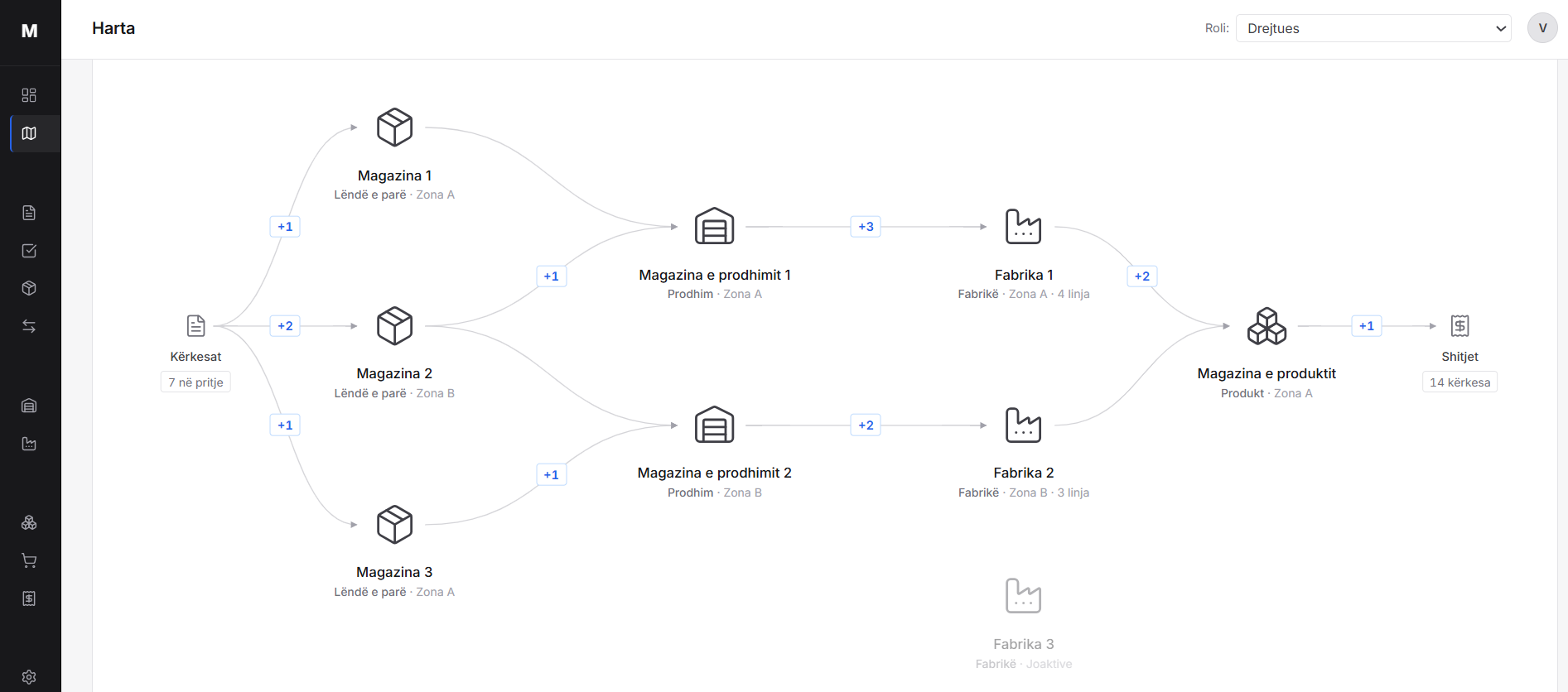
The chain
Seven stages, one record. Each stage hands off to the next with the movement recorded.
- 01
Raw material requests
Raised, reviewed, approved or rejected
- 02
Raw material warehouse
Stock, minimum levels, goods receipt
- 03
Transfer to production
Recorded movement, not manual adjustment
- 04
Production warehouse
Material issued to the floor
- 05
Factory
Work in progress and consumption
- 06
Product warehouse
Finished goods by article
- 07
Sales and invoicing
Orders, dispatch, settled and outstanding
Capabilities
Raw materials
- Requests raised by any authorised user, carrying material, quantity, unit, destination warehouse and requester.
- Approval flow with explicit statuses — draft, pending, approved, rejected — so a request is never in an undefined state.
- Warehouse stock by item with current quantity, unit of measure and a minimum level that marks an item as low or critical.
- Goods receipt against an approved request, so recorded stock reflects what actually arrived rather than what was ordered.
- Transfers into production recorded as movements between warehouses, with quantity, date and the user responsible.
- Full item history: every movement in and out of a material, with date, quantity, user and the document that caused it.
- Material categories, units and suppliers defined per client, including materials measured in kilograms, litres, pieces or packs.
Production
- Production warehouse holding material issued to the floor but not yet consumed.
- Factory view of what is in production, at which stage, and against which order.
- Consumption recorded against production, closing the loop between material issued and product produced.
- Finished output booked into the product warehouse on completion.
- Support for more than one factory or production line where the client operates several.
Product and sales
- Product warehouse stock by article, quantity and unit.
- Purchase requests held with their status, from received through to fulfilled.
- Sales recorded against stock so availability reflects committed quantities.
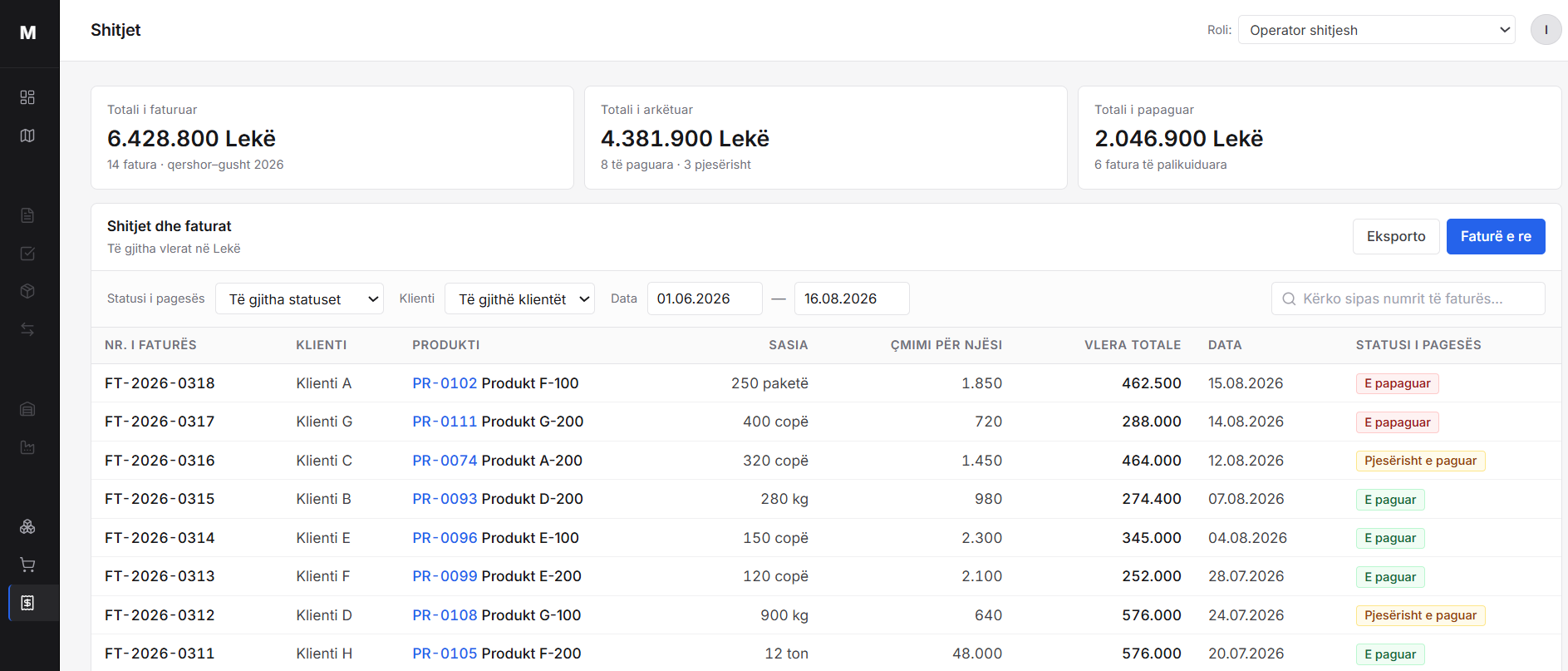
- Invoicing with settled and outstanding invoices tracked separately.
- Sales history by product, customer and period.
Administration
- User accounts, roles and the assignment of people to warehouses or factories.
- Configuration of warehouses, factories, material categories, units and statuses.
- Approval flows defined per request type rather than hard-coded.
- Dashboard showing the current state of every stage of the chain.
- Export of stock, movement and sales data for accounting and reporting.
- Record of who changed what and when.
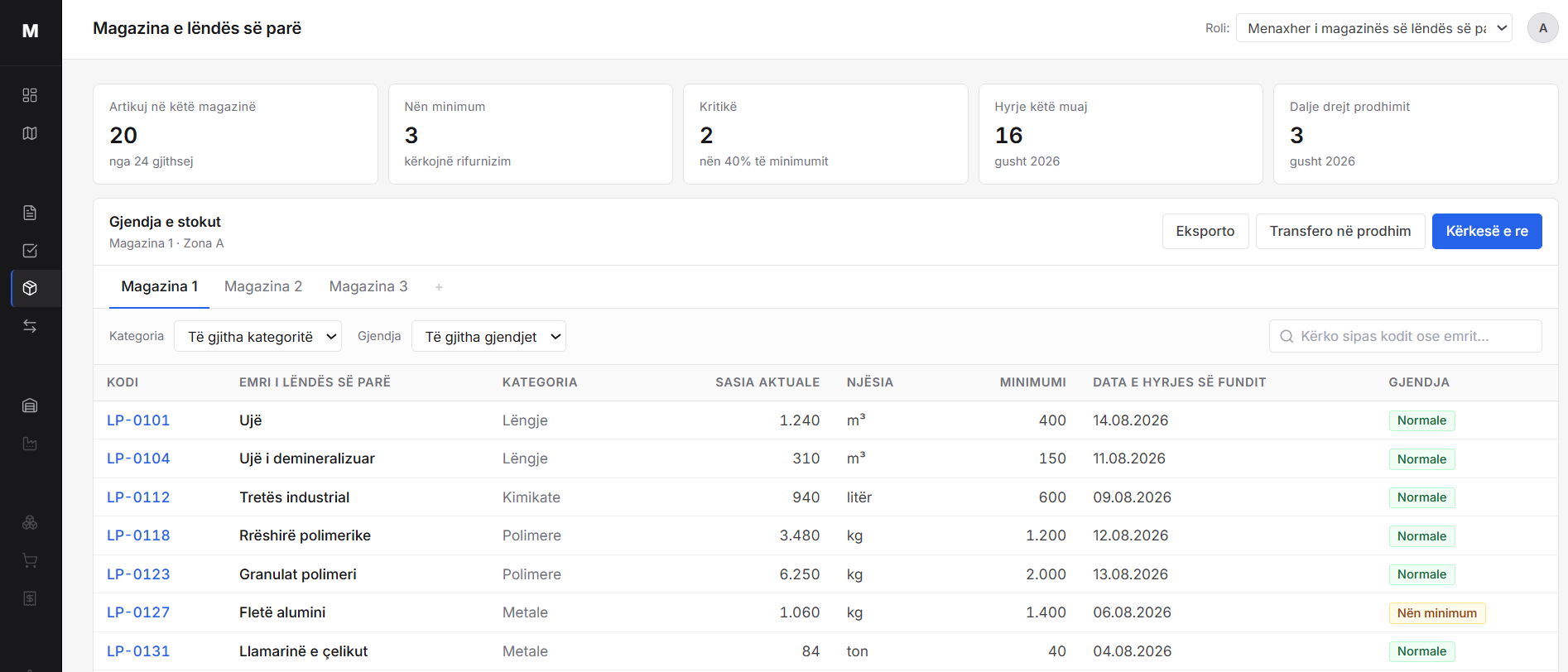
Roles and access
MATERA is multi-user with role-based visibility. A user sees the part of the operation they are responsible for, and actions outside their role are unavailable rather than merely discouraged. Roles are defined during setup; these are typical:
- Administrator
- Raw material warehouse manager
- Production manager
- Product warehouse manager
- Sales operator
- Executive, read-only
Configuration
Warehouses, factories, material categories, units of measure, request statuses and approval flows are defined per client rather than fixed by the platform. A company with three raw material warehouses and two production lines is configured as such; a company with one of each is not made to carry structure it does not need. Changing this configuration is an administrative task, not a development request.
Delivery
Rollout is phased. Each phase ends with something in use, not a document.
- 01
Scoping with the client
We walk the actual process with the people who run it: how material is requested today, who approves it, where it is stored, how production consumes it, how sales are recorded. The configuration is decided here — warehouses, categories, units, statuses, roles.
- 02
Pilot on one area
One part of the operation goes live first, usually raw material requests and the raw material warehouse. It runs against real material and real people, in parallel with whatever is in use today, until it is trusted.
- 03
Expansion
The remaining stages are brought in one at a time — production, product warehouse, sales and invoicing — each with the same pattern of pilot then adoption. Training happens per role as each stage arrives.